This World Water Day: Relief to Chhemdi village
Today (22 March) is World Water day, a day designed to inspire action to tackle the global water crisis. Thanks to your support, in Nepal we have worked for decades providing clean accessible water for remote communities.
Chhemdi Vilage

Located approximately five hours’ drive from Pokhara in the west of Nepal, Chhemdi village predominantly comprises members of the Magar community who rely on subsistence farming for their livelihood. There are 71 households and a village population of just over 300.
Like many rural communities across Nepal, a significant portion of the younger population has sought employment opportunities abroad.
Existing water system
Water scarcity has long been a challenge for the village, with women spending considerable time trekking to water sources for their households. Although a communal water supply system was established in 1996/97 by a development agency, its reliability remained inconsistent.
However, thanks to the recent efforts of The Gurkha Welfare Trust, the village now boasts a dependable and hygienic water supply system. With individual taps installed at each home, villagers now have access to clean water around the clock.
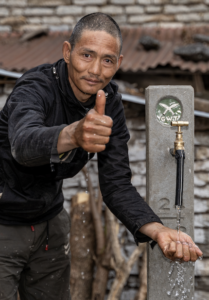 Mr Deuman Purja is Chairman of the Water Users’ Sanitation and Management Committee.
“The old water supply system was installed over 25 years ago. We collected water from two water sources, and these were supplied in the village through communal taps constructed at various points within the village.”
He further lamented,
“Since the water collection chambers were open in the old system, dirty debris would often run through the water pipes. During monsoon, the villagers would have to drink turbid water and there was always a risk of contamination and waterborne diseases. We would have to purify or treat the water before drinking it.”
Changing communities
Ms. Anu Thakali, Secretary of the Water Users’ Sanitation and Management Committee, expressed her satisfaction with the new system, saying,
“I am working as a Sectary in Chhemdi. I am a housewife and look after households and agriculture. We all are happy with the construction work of this water supply project. I am feeling good right now. It is so good to have safe water in all households.”
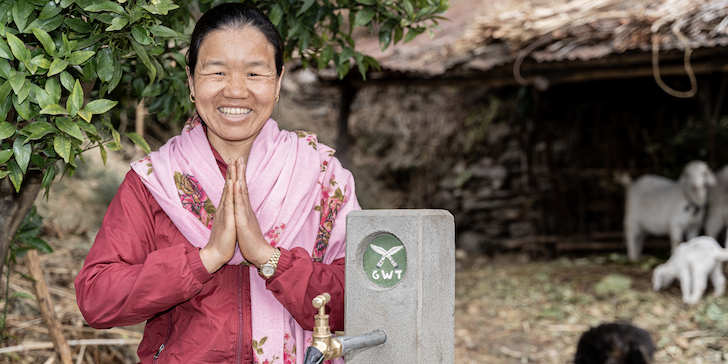
She credited the Gurkha Welfare Trust for not only building physical structures but also for educating the community on essential sanitation and hygiene practices.
“The Gurkha Welfare Trust not only constructed the physical structures but they imparted knowledge on the importance of water source protection, Gender Equality And Social Inclusion (GESI), water purification and the need to have a resilient and sustainable water supply system.”
Thakali highlighted the committee’s decision to waive contributions for vulnerable households, stating, “Some of the villagers were not able to provide the community contribution required, especially those with physical disability, elderly and people with lower income. There were three households like that and the committee have agreed to waive their contribution which I think is a great communal bonding.”
Expressing gratitude, Thakali concluded,
“Thank you for the hard work and I like to thank the donors for this project.”
Previous / next Image
This World Teachers’ Day, we are shining a light on the dedicated educators behind the classroom doors at Shree Saraswati…
Heavy rains on Monday 28th September caused widespread flooding and landslides across Nepal, with Chitwan among the hardest-hit regions. The…
The Trust is rebuilding hope for children in Saraswati, a small village in Nepal’s Baglung district, through a major school…