Transforming Hygiene and Health in Arbaudi Village
Arbaudi Viliage lies high in the hills of the Baglung District in central Nepal. The residents of the Village faced a relentless daily challenge: their only available water source lay far below their hilltop settlement. Because gravity couldn’t pull water uphill, they were forced to carry heavy loads by hand or rely on unsafe, unpredictable streams, leaving families without a dependable year-round supply or proper sanitation facilities.
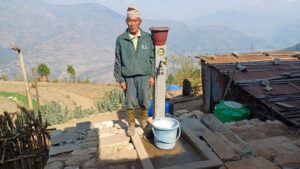
Gurkha veteran Ratna Bahadur Thapa lives in the village and brought the concerns of the community forward to The Gurkha Welfare Trust.
The Gurkha Welfare Trust were commited to improving the daily struggles of Ratna Bahadur and his community but this would be a complex project due to the location of the water source beneath the village.
Engineering an Uphill Solution
This project required a sophisticated lift water supply scheme, pumping water uphill rather than relying on a traditional gravity-fed system.
Working in close partnership with local government, our technical teams constructed a new reservoir, pump house, and protective retaining structures before installing the electrical pumping framework.
Empowering the Community & Hygiene
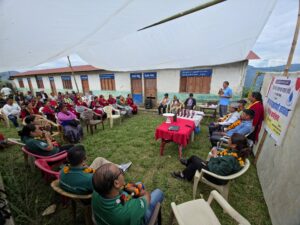 The long-term success of the project relies on community ownership. Before construction began, GWT provided practical training and guidance on sanitation and hygiene, helping families adopt better habits like handwashing, safe water storage, and maintaining clean tap sites. We also supported households in constructing toilets and dish-drying racks to raise overall standards of hygiene around the home.
Beyond sanitation, residents learned essential maintenance skills. Today, local workers can fix leaking pipes, replace faulty taps, and carry out routine tank cleaning independently. This immediate, first-line support ensures minor issues are resolved quickly before they become costly disruptions.
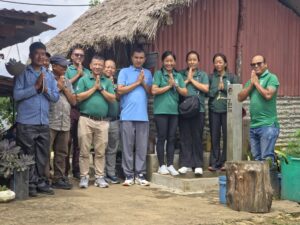
Transforming Daily Life
The changes are visible in everyday household life. Washing dishes, cleaning and cooking, which previously required carrying water from a distant or seasonal source, can now be done using a piped supply close to home. The benefit is not only easier access to water. Time and effort that families once spent collecting water can now be used for other household work, earning an income, caring for family members, or simply having time to rest.
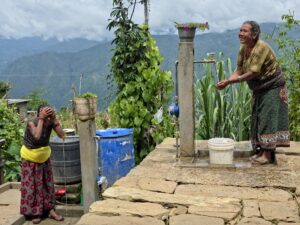
A reliable tap at home reduces daily effort, supports better hygiene and gives people greater comfort, dignity and control over their everyday lives. The ripple effect reaches beyond the water point—into sanitation, household hygiene, health, time use and the community’s ability to maintain its own water system.
Restoring Independence and Dignity
Amongst the households who benefitted from this new system is 55 year-old Nar Bahadur Thapa, who lives with a spinal cord injury. He no longer needs to be carried or assisted to a distant source to wash or drink.
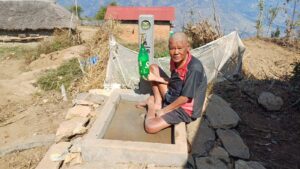
 Another villager who has found the new water system particularly life-changing is Pahal Singh Thapa, who is elderly and blind, he can now find and use water independently, without depending on a family member’s eyes to guide him there.
By bringing clean, running water directly to the doorsteps of Arbaudi Village, this project has done far more than solve a geographic challenge. It has restored independence to those living with disability, lightened the daily load for families, and given an entire community the skills and confidence to safeguard their own future. Thanks to the generosity of our supporters, Ratna, Nar, Pahal, and their neighbours can now look forward to a healthier, brighter, and more dignified tomorrow.