Why are the Gurkhas so important to us?
Back in 2019, to celebrate The Gurkha Welfare Trust’s 50th anniversary, we asked supporters to share with us their stories of “why the Gurkhas are important to them”.

Your Gurkha Stories
Since we launched “Your Gurkha Stories” on our website we have received over 1,200 submissions, ranging from a few words to full essays.
• You tell us of personal connections with the Gurkhas, experiences which have left a lasting impression and a sense of loyalty to those who have made a difference to your life or that of a relative.
• You talk of your incredible admiration for the Gurkhas, described as “the deadliest, ferocious soldiers” but also as “the kindest and most humble people.”
• You recall the emotional impact of encountering the Gurkhas, from being rescued from a Prisoner of War camp to a simple act of hospitality or friendship.
Such experiences are often a motivation for charitable giving, and we are incredibly grateful for your generous donations which ensure we can continue to support Gurkha veterans and their widows, enabling them to live with dignity in their homeland of Nepal.
Hanneke’s Story
We regularly post our own stories on the website, those of the Gurkha veterans, widows and communities we support in Nepal. Hanneke’s account was inspired by reading about widow Chij Kumari Gurung.
“I was born just before WW2 in what was then the Dutch East Indies. My family had been there for many generations. I was particularly interested in today’s story about Chij Kumari.
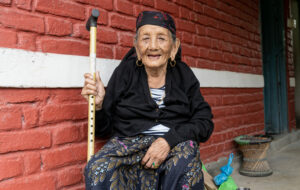
“Because of my family’s Dutch Nationality we as a family were all imprisoned by the occupying Japanese during WW2 for three-and-a-half years in huge overcrowded camps. My father was sent to build the Burma railway while all the women and children were imprisoned by the Japanese in huge concentration camps around the islands of what is now Indonesia. My mother and her three small children were living in a three bedroom house together with almost 80 other women and children. It was the Gurkhas who liberated us from those camps in August 1945. Very little is known about those concentration camps. Communication in those years was of course very limited.
“Chij Kumari’s husband may well have been my liberator all those many years ago. My mother always told us if the Gurkhas had not liberated us when they did we would not have survived the war in the Far East. We had been starved as prisoners of war for so long. So finally after all these many years I am able to say to the widow Chij Kumari thank you on behalf of your husband for saving my life all those years ago. It is of course the reason I now support The Gurkha Welfare Trust.”
“We went to stay in Pokhara, and through meeting the Gurkha team, got invited to the Gurkha Welfare Trust home in Pokhara. We were welcomed and shown around the home and met with the lovely ex Gurkhas and Gurkha widows who live there. We were also shown the medical centre and told about the great work that goes on to support and treat ex Gurkhas in Nepal. It was such a privilege to see the home and get an insight into the work that the Gurkha Welfare Trust does. It also sparked our interest into the Gurkhas and we were able to find out more by visiting the wonderful Gurkha museum in Pokhara. Meeting the Everest Expedition team was amazing and they were a genuinely nice bunch of guys. So that’s our story and the memory will stay with us forever.”