World Water Day 2023: Changing lives in Sibhuwa
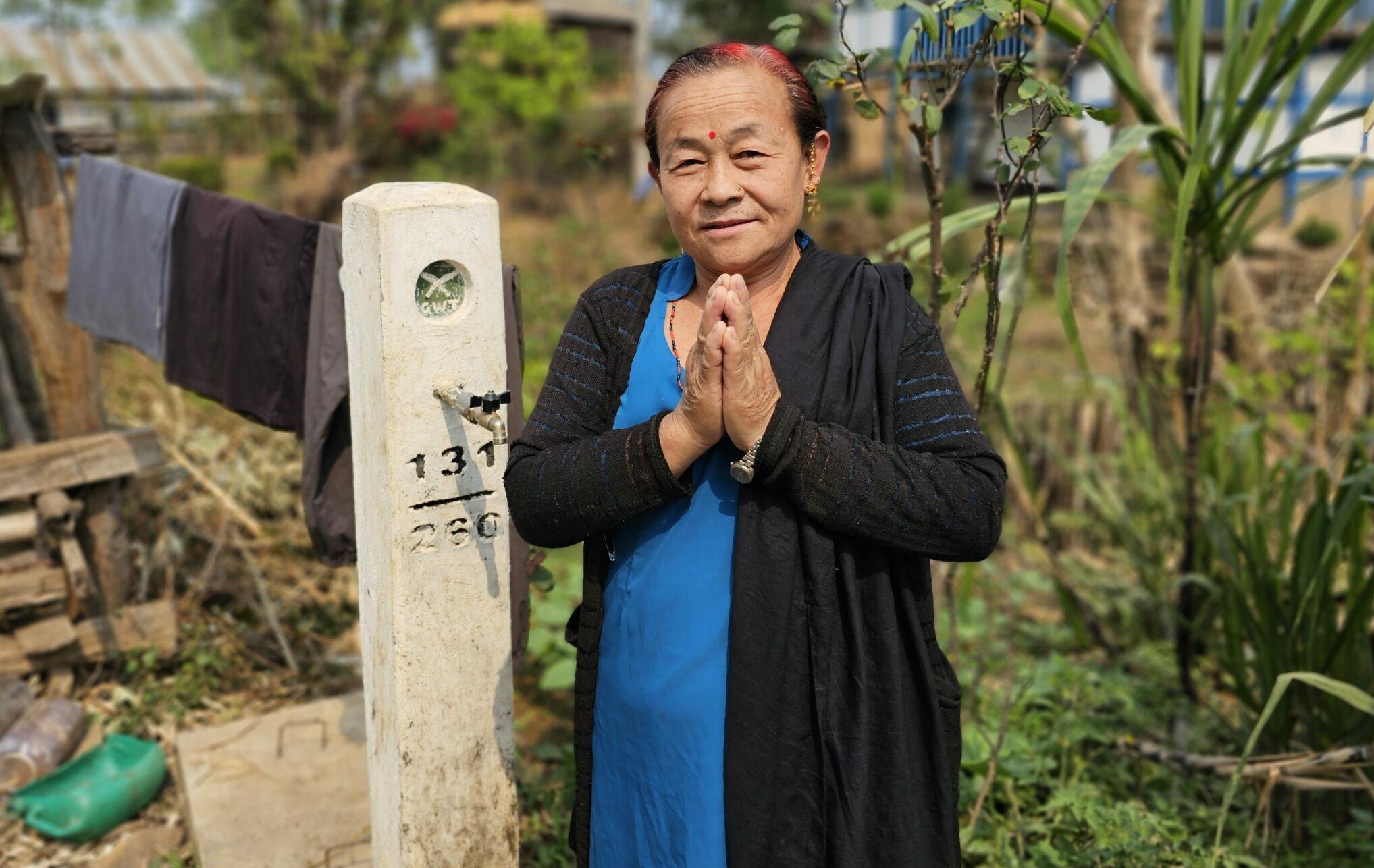
In 2023, World Water Day focuses on accelerating change.
That’s exactly what we strive to do in Nepal.
Each year World Water Day raises awareness of the global water and sanitation crisis.
In Nepal, millions of people in remote villages still lack access to clean water.
Traditionally, women and children have needed to walk for hours to collect water. Heavy rainfall and flooding also sweep debris and waste into village water sources, causing a contamination risk.
In partnership with UK Aid, we continue to provide remote villages with access to clean water and sanitation. We search for groundwater high in the Nepali hills and source materials to pipe the freshwater straight to villagers’ doorsteps.
Bringing clean water to Sibhuwa
As part of our water projects we set up a village committee, led by a Chairperson. Forming these committees empowers the community to take responsibility of the project, ensuring its sustainability into the future.
Amrit, who took on the role of Chairman for his village’s water project in Sibhuwa, said that before the GWT’s intervention, villagers shared communal taps which were unsafe to use. Those who drank the well water also risked catching waterborne diseases.
“At first, we didn’t have a systematic water supply in our village. To access safe water was challenging for everyone in the community,” Amrit said. “We would get frogs, insects, and snakes inside the old water tank. Our water was contaminated. The children would catch waterborne diseases. We needed a resilient and sustainable water supply system.”
“It used to take half an hour to fetch the water from the water source or from the public taps,” said Rohadi Rai, another volunteer for Sibhuwa’s water project committee.
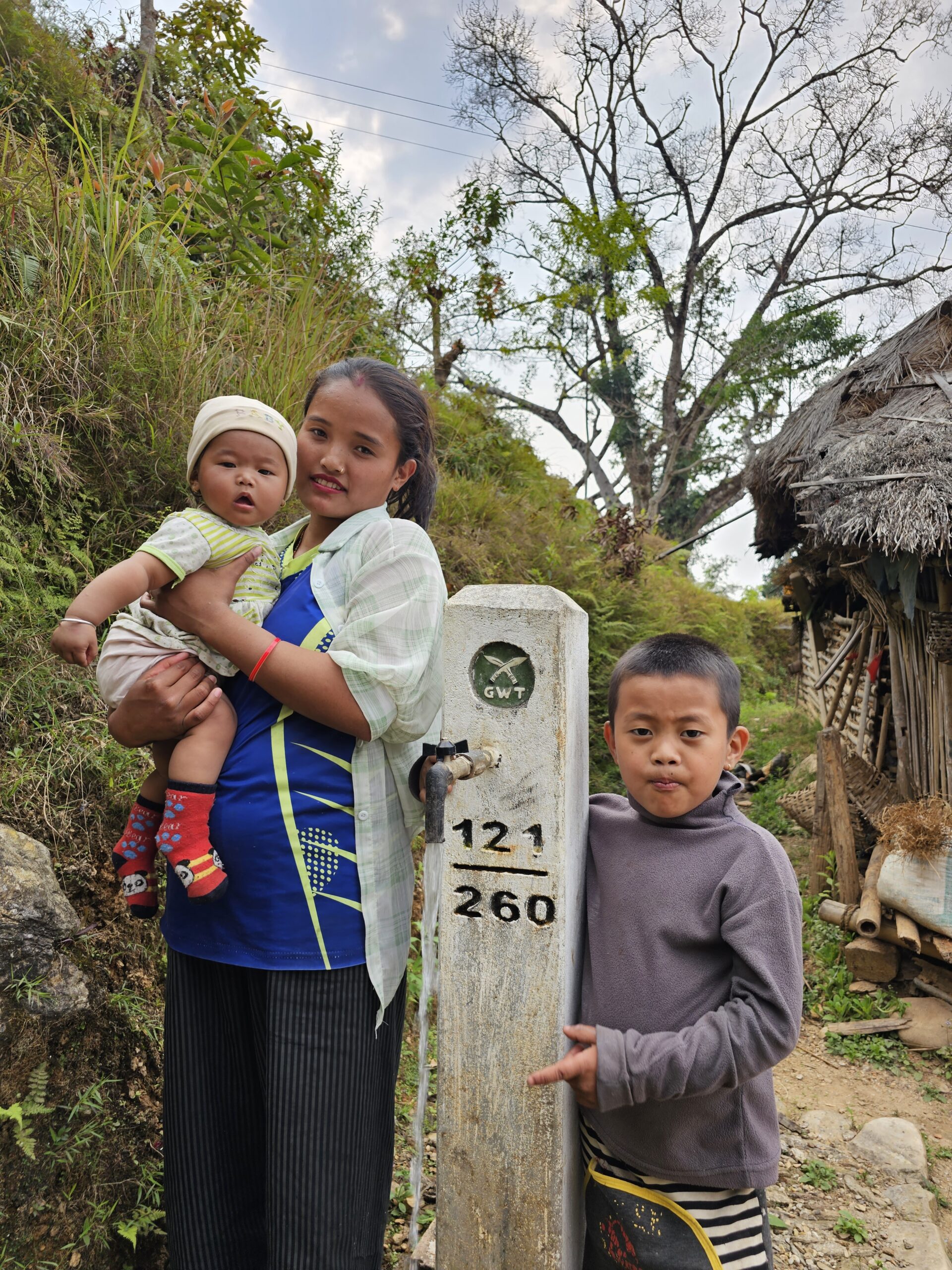
A tap stand for every home means new mothers in Sibhuwa do not need to leave their babies to collect water.
Rohadi said she instantly saw the positive impact the new water source had on the women around her. “All the villagers are very happy now that we have plenty of safe water that can be used for household activities. Mostly, mothers have benefitted. They can now wash clothes instantly in their houses. For new mothers or pregnant women, they do not have to go far to fetch water. They have tap stands [next to] their homes. New mothers do not have to ask others to babysit their babies anymore. Thank you for bringing a positive change to my community.”
The Trust also provided villagers with guidance on how to use their new water supply as a simple drip irrigation system, so that they can grow vegetables during the dry season.
Sibhuwa’s local school, Shree Jambawatee Secondary School, also struggled with student attendance, because the children had to take time away from school to help women from the village collect water. “Children couldn’t focus on their education,” Amrit said. “Now, children can regularly attend the school on time. There are also less incidents of waterborne diseases. People are happy about the GWT’s work.”
In total, the GWT installed 260 tap stands in Sibhuwa, benefitting 1,427 people and 252 households.
Now, villagers in Sibhuwa do not need to worry about inconsistent water supply, contaminated water, or long walks to fetch water from shared tap stands. Each household has a tap stand at its doorstep, supplying clean, safe water from the ground up.

Villagers use their new water supply as a simple drip irrigation system, so they can grow vegetables during the dry season.