Women leading change in Shera Dhad Damar

Shera Dhad Damar is a picturesque rural village located in the foothills of Gulmi District.
Like many villages in rural Nepal, this community had long faced a serious drinking water problem. Although there was enough water for farming, the villagers had no proper system for safe, clean drinking water. Families had to rely on streams nearby, walking nearly an hour just to collect water to drink or cook with.
“Most of our young people have gone abroad for work,” says Dilli Ram Neupane, Secretary of the Water Users and Sanitation Committee (WUSC). “There just aren’t enough jobs in Nepal, and farming doesn’t provide enough to live on. The village is now mostly women, children and elderly people.”
The project has brought a major change to daily life, especially for women. Bhim Lal Neupane, Chairman of the WUSC, says, “For us, this project is like a child for a couple who couldn’t have one. It has brought so much joy. Now, the housewives don’t have to spare time from cooking and working in the fields to walk far and fetch water.”
One of the happiest beneficiaries is 63-year-old Kunti Devi Neupane, who lives with her husband, daughter-in-law, and grandson. Her son is working abroad. “Until a few months ago, I could never have imagined that clean drinking water would run right in front of my house. I feel so lucky to have this luxury in my lifetime!”

Empowering Women Through Water: Durga’s Story
In rural Nepal, women spend most of their time doing household chores — cooking, cleaning, farming, and collecting water. But thanks to this drinking water project, women like Durga Neupane are stepping into new roles in their communities.
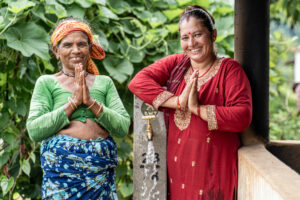
Durga, 40, lives with her mother-in-law and two sons. Her husband works in Qatar and only comes home every two years. “Farming didn’t provide enough, so he had to go overseas,” Durga says. Like many women, her daily routine is a busy one — caring for animals, gardening, cooking, and cleaning. Yet, she volunteered to become a Village Maintenance Worker for the GWT water project in her village.
“I wanted to learn something new and help my community,” she says. Before the project, water was hard to get. “We used to queue all day to fetch water. Now, we have clean water right at our doorstep.”
With GWT’s training, Durga learned how to fix pipes and carry out small repairs. “I used to be nervous, but now I feel confident. I even got paid equally as men during construction.” She believes that women, given the chance, can lead change. “We don’t need to stay limited to housework. We can build and contribute too.”
Durga thanks GWT and our supporters:
“You didn’t just give us water, you gave us knowledge and strength. Dhanyabaad!”
Clean Water, Better Lives: Menuka’s Story
Menuka Neupane, a local social worker and ward member, explains: “I live with my husband, and we have four children. My daily routine includes travelling to the municipality office, which is about eight kilometres away, and also managing the house. Life is busy!”

Before the project, accessing clean water was a daily challenge. “During monsoon, the water from the open source used to be muddy and unsafe. We had to walk to nearby streams and queue for hours. It was especially hard when we were busy in the fields,” she recalls. “Now, we have clean, running water right next to our house. It feels safe, and the water has been tested. Even our guests feel comfortable drinking it now.”
Menuka says the biggest change has been for women: “We no longer have to spend hours fetching water. That time is now used for other household tasks or even rest. It has brought peace of mind and better health to our families. We were unsure at first if the project would really happen. But now, it’s a reality—and it’s made a huge difference.”
“Thank you to all the supporters. You’ve helped not just with water, but with dignity, time, and health. Dhanyabaad!”