Where did our pensioners serve?
We provide financial and medical aid to over 2,900 Gurkha veterans and widows in Nepal. We provide a pension to veterans who were not eligible for a British Army pension, many of whom were affected by redundancies across the regiments after WW2 and returned home with very little. Each regiment they fought with has it’s own unique history and each veteran has his own story to tell.
 2GR (2nd King Edward’s Own Gurkha Rifles)
Established in 1815, the 2nd Gurkha Rifles have a storied history in conflcts across the globe. Riflemen were noted for their bravery during the Burma Campaign in World War II.
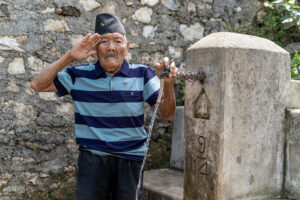
Jitbahadur Gurung 2GR
“I enlisted from Gorakhpur and trained in Dehradun. We sailed from Bombay to Singapore. During the war, there was heavy firing and bombing from both sides. There used to be huge explosions, hurling large drums into the sky. In the midst of all these heavy bombings and explosions, I thought that the bullets from a rifle could not harm me at all!“
We support 262 veterans and their families from this regiment with pensions, helping them live with dignity in their later years.
 6GR (6th Queen Elizabeth’s Own Gurkha Rifles)
Formed in 1817, the 6th Gurkha Rifles are celebrated for their bravery in battles around the world. They are particularly noted for their courage and tenacity in the Gallipoli Campaign in World War I.
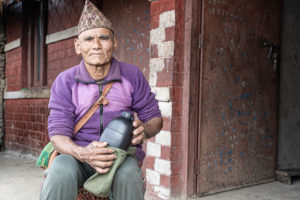
Dham Bahadur Gurung 6GR
“In 1965, after enlisting, we trained for nine months. We had sailed to Hong Kong on a ship. We were on patrol on a hill in Hong Kong. We were ambushed on the way. The Lance Corporal did not die, neither did the Sergeant, but the captain…. I don’t know how it happened, he got shot and fell to the ground. They were Chinese rebels, the enemies.“
Currently, 362 veterans and their families are vulnerable pensioners.
 7GR (7th Duke of Edinburgh’s Own Gurkha Rifles)
The 7th Gurkha Rifles, established in 1902, have a proud history of service. They are known for their critical role during the Falklands War.

RFN Padam Bahadur Sunwar
7GR
“I served in the army for 9 years, 8 months, and 24 days. The number of battalions decreased, and half of them went to the UK. I was made redundant. It’s been about 18 years since I started receiving a charitable pension. In the beginning, I thought I wouldn’t even have the chance to receive the pension for 10 years. But now, looking back, it’s been quite some time since I have been getting the pension.”
We support 448 veterans and their families from this regiment.
 10th Princess Mary’s Own Gurkha Rifles
The 10th Gurkha Rifles was established in 1890. They fought valiantly in the Middle East in the First World War, and are particularly noted for their bravery and determination in Italy in 1944-5.
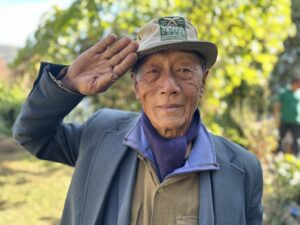
Phur Bahadur Sunwar
10GR
“I fought in Borneo against Indonesia and received a medal for my efforts. We had to venture into a dense forest where the trees were so tall that our eyes couldn’t gauge their height. You can see a small portion of the sky. We had to walk through swampy areas where we couldn’t see the ground. There was an incident in which five or six soldiers from the 11th platoon died in a boat accident. I was in the 12th platoon. The 11th platoon was also ambushed. We had to ambush the enemy and wait for them in the forest. We couldn’t speak or make any noise. We couldn’t even make any noise while walking through the jungle. It used to rain heavily, so we had to carry our Rashan for 4,5 days, mosquito net. Our boots and clothes were dropped from the helicopter so we could discard our old ones and put on new ones. ”
In total, 473 veterans from this regiment and their families receive pensions from us.
 QGE (Queen’s Gurkha Engineers)
This regiment can trace its history back to before World War II, as the 36 Army Engineer Regiment. It was based in Germany in World War II and today is a general support engineer regiment.
Currently, 166 veterans and their families are vulnerable pensioners.
 QG SIGNALS (Queen’s Gurkha Signals)
This regiment traces its history back to 1911, when Gurkha Signallers were employed in the three Indian Corps of Sappers and Miners. The second Gurkha Signals unit was created during the Malayan Emergency, when it fought valiantly against a communist guerrilla organisation.
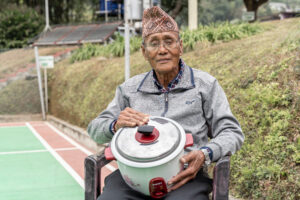
Sig Kulbahadur Gurung QGS
“I enlisted in 1962 from Paklihawa. I left the village and went to enlist on my own. My elder brother was in the army so he had guided me. We went on an aeroplane the first time and later when I came on leave, we were sent on a ship. It took us seven days and seven nights to and from Calcutta. After the training, I was posted to Serambam. I was posted in the same place until I was made redundant in 1970.”
Currently, 98 veterans and their families are vulnerable pensioners.

QOGLR (The Queen’s Own Gurkha Logistic Regiment)
Created on 5 April 2001, this regiment was formed as a merger of three previous regiments. Its primary role is as a theatre logistic regiment, responding to any challenges today or tomorrow, at home or on operations overseas.
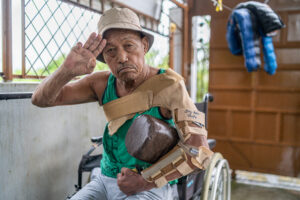
Jag Bahadur Thapa GTR
Jag Bahadur enlisted into the British Army in 1961 and served in Malaya, Borneo and Hong Kong. He was posted into the Gurkha Transport Regiment (GTR) as driver. Jag was made redundant in 1971 and he returned to Nepal.
Today, 151 veterans and their families from this regiment depend on our pensions.
 9GR (9th Gurkha Rifles)
The 9th Gurkha Rifles, formed in 1819, have a storied legacy in numerous conflicts. They are particularly noted for their role in the Battle of Monte Cassino.
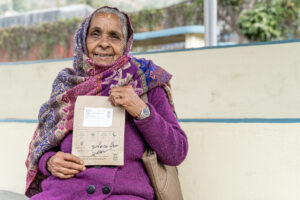
Muktisara Chhetri
Widow of Rambahadur Chhetri 9GR
“We started receiving the welfare pension from 1992. My husband was sick and he was carried to the welfare centre to receive the first quarterly pension.”
We support 188 veterans and their families from this regiment.
 1GR (1st King George V’s Gurkha Rifles)
The 1st Gurkha Rifles, formed in 1815, are renowned for their valour in various campaigns, including the World Wars. They were instrumental in the Battle of Imphal, a turning point in World War II.
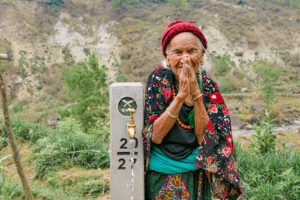
Mai Sari Gurung Widow of Gaj Bahadur Gurung 1GR
“My name is Mai Sari Gurung and I am wife of Gaj Bahadur Gurung. Thank you for the welfare pension.
Today, 99 veterans and their families from this regiment depend on pensions. Each one is a lifeline, ensuring they can afford basic necessities like food and heating.
 3GR (3rd Queen Alexandra’s Own Gurkha Rifles)
The 3rd Gurkha Rifles, formed in 1815, played key roles in the World Wars and beyond.
Currently, 107 veterans and their families receive our assistance.
 4GR (4th Prince of Wales’ Own Gurkha Rifles)
The 4th Gurkha Rifles have a legacy of bravery dating back to their formation in 1857. They are celebrated for their role in the Chindits operating behind Japanese lines during the Burma campaign in World War II.
We provide pensions to 137 veterans and their families of this regiment.
 5GR (5th Gurkha Rifles)
The 5th Gurkha Rifles, formed in 1858, have a distinguished record in numerous campaigns. In particular, they are highly regarded for their involvement in the Gallipoli Campaign and after WWI were made ‘Royal’ Gurkha Rifles.
We support 104 veterans and their families from this regiment.
 8GR (8th Gurkha Rifles)
The 8th Gurkha Rifles, formed in 1824, are known for their valour and service. They were crucial during the Italian campaign in World War II.
We support 77 veterans and their families from this regiment.