Saraswati School – Building for Nepal’s Future

Shree Saraswati Secondary School in Khotang District was established in 1954 by the local villagers, initially operating from temporary thatched shelters. After a setback in 1988 when an earthquake destroyed the buildings, the school was repaired and expanded over the years.
The school has 262 students, with about 90% of them attending school regularly. Attendance is more difficult for girls, primarily due to household responsibilities.
On average, students have to walk about an hour to attend school, although for some the journey is as long as two hours each way. The road to the village is rough and steep, and inaccessible in the monsoon. During heavy rainfall even the footpaths students take – across fields and rivers – can be impassable.
As Saraswati is a government school, the fees are minimal, with a small charge for exams and computer usage. But some families struggle to afford even this – we heard a story of one student whose family was so poor he resorted to collecting manure from nearby homes to raise the money. Fortunately he is now being assisted by a scholarship fund.
After an initial recce the report indicated that out of 17 classrooms, 12 were deemed unsafe for use and the rest in need of refurbishment. Issues included leaking roofs, rooms without windows or windows that wouldn’t close, unfinished plaster walls and damaged wooden floors.

The old buildings were not built to withstand earthquakes, posing a constant risk to students and staff in the event of seismic activity.
Toilet facilities were inadequate, with no changing rooms for girls or hygienic disposal facilities for sanitary pads. The water supply was unreliable and often contaminated by sand and mud.
The school’s vision
Headteacher Mrs Sittal Rai explained: “We face significant challenges… The poor learning environment, including issues with classroom conditions, lack of proper windows, and insufficient roofing, negatively impacts students’ willingness and ability to study. These conditions also affect our academic performance.”
“The GWT project will have a profound impact on our school. It will significantly enhance the quality and quantity of educational resources, as well as boost the motivation among both teachers and students.”
“Furthermore, with better infrastructure, we can introduce modern teaching aids such as projectors, smart TVs, and computers. These tools will improve the learning experience and help students grasp concepts more effectively.”
From dreams to reality
The project was completed earlier this year, with two new blocks providing 12 classrooms, and refurbishment of another 4 classrooms. We provided a disability-friendly toilet block, classroom and library furniture, an incinerator, water taps and improved boundary fencing.
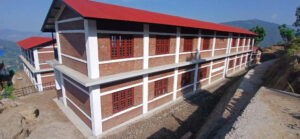
The handover ceremony was a proud moment for GWT staff:
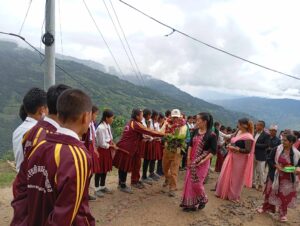
“In just a year, a safe and clean space has been created where children can learn, laugh, and grow. No more fear, no more limits — just the assurance of a better education for all.”
“This newly built infrastructure stands proudly against the rural landscape. Shree Saraswati Secondary School is poised to become a cornerstone of learning and opportunity. Jai GWT!”