50 Years of Bringing Clean Water to Nepal
In the early 1970’s access to clean and managed drinking water in Nepal was extremely scarce, with only around 4-5% of the total population having access to a stable and safe water source. Over 90% of Government development funds spent on water infrastructure were concentrated in urban centers like Kathmandu, leaving rural hill and mountain regions completely reliant on unprotected local sources.

Rural families relied heavily on open rivers, shallow wells, and natural stone spouts (dhunge dharas). These sources ran extremely low or dried up in the dry season and turned muddy and contaminated during the monsoon. Waterborne diseases like cholera, typhoid, and dysentery were endemic, contributing to very high infant and child mortality rates.
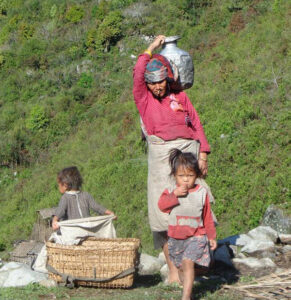
Without localised tap stands or rainwater harvesting systems, women and children in hill villages could spend hours every day walking rough mountain paths to haul heavy copper vessels (gagris) back to their homes. There were virtually no local user committees, piping networks, or storage tanks to harvest and distribute clean water in remote regions.
When the Gurkha Welfare Trust was established in 1969, its prime focus was to ease the financial burden on Gurkha veterans who were made redundant during British military downsizing in the late 1960s. Many returned to rural Nepal without qualifying for a British Army service pension (which required 15 years of service).
The Need for Clean Water
By the mid-1970s, GWT recognised a stark reality in the remote hill villages where Gurkha veterans lived: financial pensions alone could not buy health if the community had no clean water.
By partnering with local committees to install gravity-fed clean water supply schemes, GWT realised it could support the entire village where veterans lived.
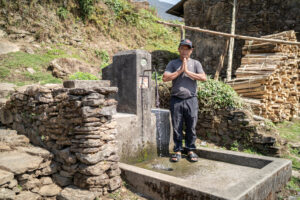
The Trust’s first water project was in the remote village of Khilang, where, along with Canadian International Development Agence (CIDA) access to clean water was brought to 146 households by installing 35 taps.
Expanding Our Impact: The Launch of RWEPP
Each year since, The Trust has delivered water projects across Nepal. In July 2021 The Resilient Water and Emergency Preparedness Programme (RWEPP) was launched. This was a five-year programme that saw a collaboration between UK Aid and GWT with funding provided by the Foreign, Commonwealth & Development Office (FCDO). The programme focussed on:
– Climate & Infrastructure Resilience: Building water systems designed to withstand extreme climate events, such as heavy monsoon floods, landslides, and droughts.
– Household Taps & Sanitation: Delivering clean drinking water taps directly to household doorsteps, school sanitation facilities, and handwashing stations.
– Disaster Risk Reduction (DRR): Providing training for rural communities and local government representatives in emergency preparedness, early warning systems, and rapid assessment to save lives during natural disasters.
– Gender Equality & Social Inclusion (GESI): Ensuring women and vulnerable groups were involved in local water user committees and decision-making.
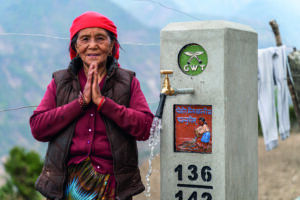
Through this project, The Gurkha Welfare Trust were able to commit to delivering 80-100 water projects a year.
Overcoming Funding Cuts: GWT Steps Up
When government aid cuts abruptly ended FCDO funding for our water programme in early 2025, our incredible supporters stepped up to help cover the gap. Thanks to the swift, generous backing of individual donors, trusts, and corporate sponsors, we ensured that vital, climate-resilient water systems continue to reach the communities that need them most.
The Journey Ahead
To date The Gurkha Welfare Trust has delivered 2,495 water projects across Nepal, bringing safe clean water to 90,751 households, improving the lives of 637,737 people.

Although the proportion of people who have access to a safe, clean water supply has increased from 4% to 16% over the last fifty years, there are still 3.5 million people in Nepal in desperate need. With your continued support we will continue our work to end water poverty and this year plan to install another 31 water projects across Nepal, bringing clean safe water to 6,600 people.