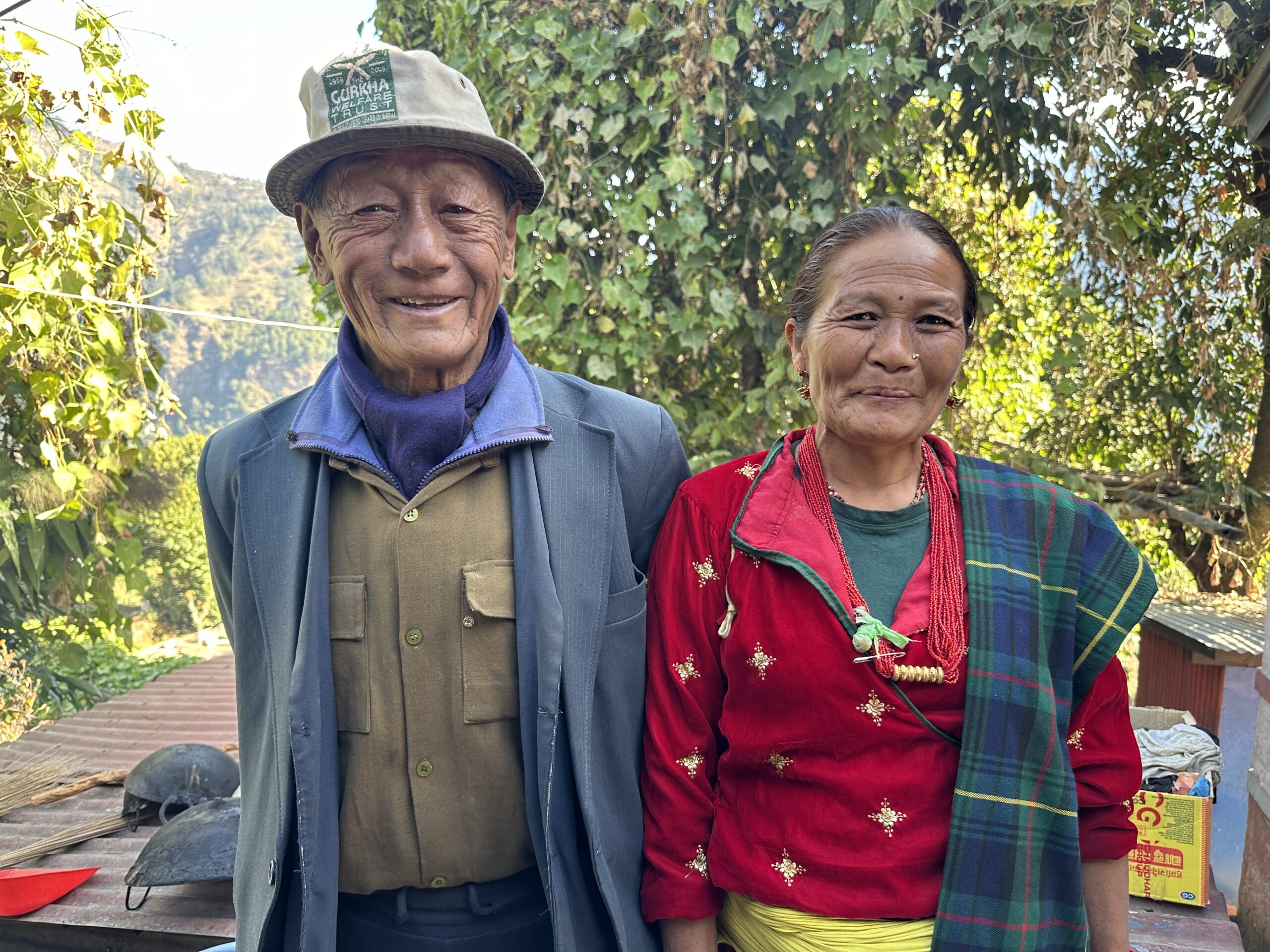
Proud veteran Phur Bahadur recalls his Army days
Most of our teams in Nepal work from our Area Welfare Offices, but we also have two smaller ‘Patrol Bases’ which provide for those living in more remote regions. One of these is in Jiri, approximately 190 km from Nepal’s capital, Kathmandu.
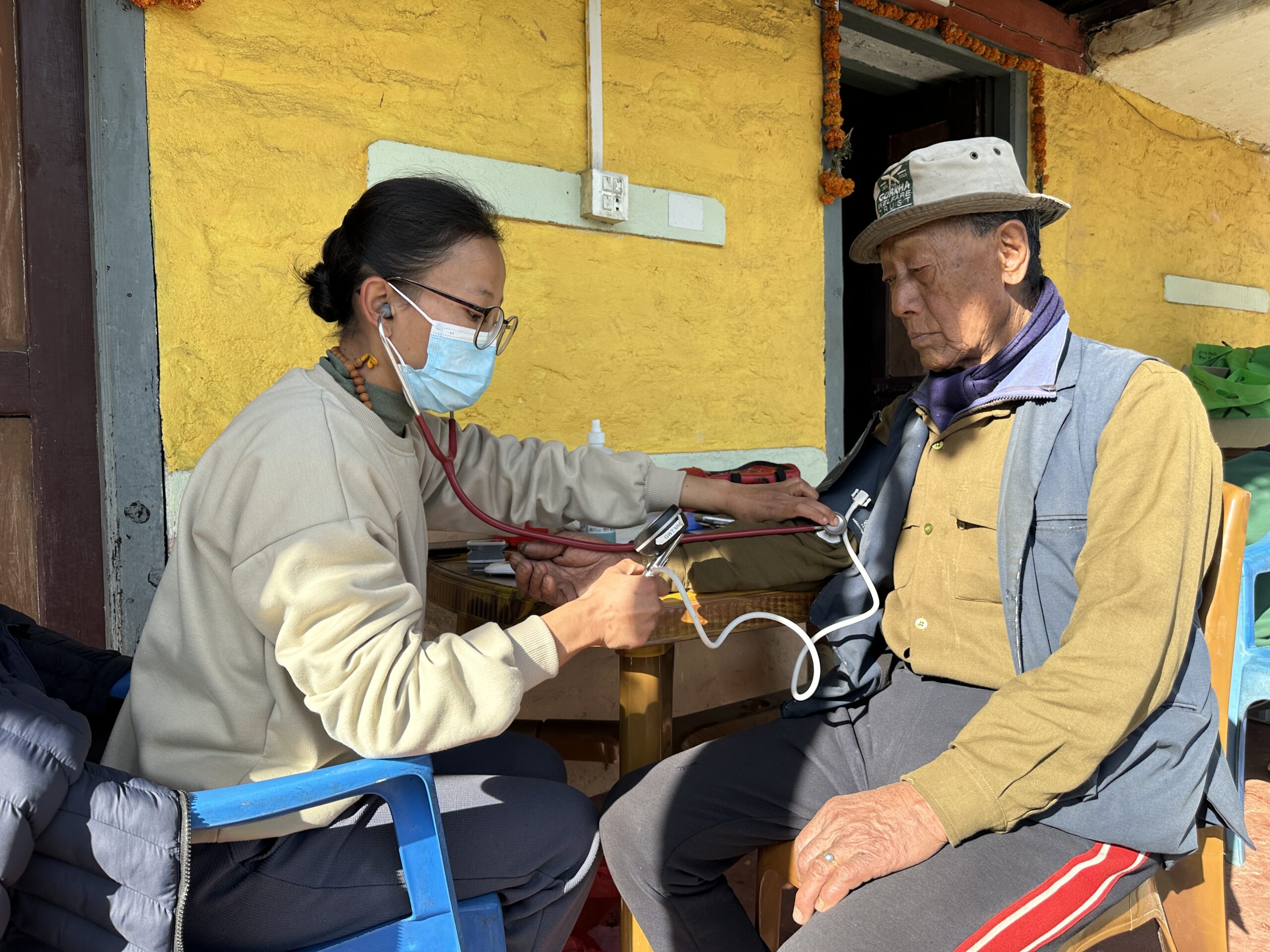
Patrol Base Jiri runs a quarterly clinic, where pensioners can access vital medical services well as receiving their pension payment. Our medical staff provide health check-ups, weight measurement, blood sugar level tests and blood pressure checks, alongside advice and exercises to help maintain their health and provide some relief from joint pain.
Visiting the base is a huge boost to their well-being, as they not only receive vital medical care, they have a chance to chat with other veterans and share memories of their Army days.

Phur Bhahadur’s story
Eighty-year-old Phur Bahadur Sunwar and his wife Mina Devi arrived at the Patrol Base on foot. Phur served in the 10th Gurka Rifles for ten years and has been receiving a pension from the GWT since 2006.
“I was recruited into the army in 1961 in Dharan. I only had Rs 25 when I went for the recruitment barefoot. From Dharan, we travelled to Jogmani and from there to Calcutta, then flew to Singapore. Over there, we trained and learned how to use weapons. We also had to participate in physical training sessions and parades. First, they used to train us by carrying a stick, and later they gave us an SLR rifle.
During my time, many weapons have changed. Instead of the SLR, the AR-15 was introduced, and the LMG was replaced by the GPMG. The two-inch mortar and rocket launcher were among the many weapons that were changed. I also received training on a firearm that was on a ship. Not everyone could use it, you needed to be strong.”
A medal for bravery
“I also fought in Borneo against Indonesia and received a medal for my efforts. We had to venture into a dense forest where the trees were so tall that our eyes couldn’t gauge their height. You could only see a small portion of the sky. We had to walk through swampy areas where we couldn’t see the ground.
“There was an incident in which five or six soldiers from the 11th platoon died in a boat accident. We had to ambush the enemy and wait for them in the forest. We couldn’t speak or make any noise while walking through the jungle. It used to rain heavily, so we had to carry our rations for for 4,5 days, and mosquito net. Our boots and clothes were dropped from the helicopter so we could discard our old ones and put on new ones.
“I served in the army for 9 years and 230 days. They said that those who will leave the army will receive a payment of Rs 360. At that time, I raised my hand. It had only been six months since I was promoted to Lance Corporal. After leaving the army, I went to India and worked as a security guard for 30 years in a company. After retiring, I came back to Nepal.
The welfare pension is a lifeline
“I received my welfare pension, which was Rs 400. Sometimes I go to collect my money, and sometimes my youngest son does it for me. If you hire an ox to plow the field, it will cost you Rs 1,000, and if you hire a person to work in the field, they will charge you a minimum of Rs 500 per day. My farm is located quite a distance from my home, so if you hire someone to carry manure to the field, they typically charge between Rs 300 and Rs 500. We have to buy food and clothes, so all of the pension is spent on those necessities. I enjoy eating meat once a week. I love consuming milk, ghee, and honey.
“I am happy to have received support from the welfare office. We had worked for them, so in return they are helping us. If not, then life would have been difficult. I would like to thank all the supporters. God bless them all. I hope they live long and continue to help people like us.”