Safe Toilets, Equal Futures: Bringing Dignity and Health to Nepal’s Remote Communities
The strength of a soldier comes from their bravery, but growing old in the steep hills of Nepal takes a different kind of daily courage.
For decades, Gurkha veterans and their families have given so much in service to others. Yet today, in remote mountain villages across Nepal, many of these elderly heroes and their widows face a huge challenge right at home: the lack of a safe, accessible toilet.
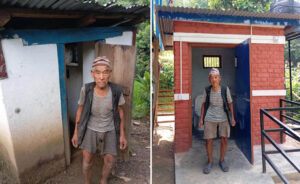
The Hidden Risk in the Hills
In rural Nepal, even simple daily routines can be dangerous. Walking down steep, slippery paths in the dark or relying on dilapidated latrines puts our elders at serious risk. For a veteran or widow with limited mobility, an unsafe toilet is far more than an inconvenience, it can lead to dangerous falls, stripped independence, and an extra burden of care on family members.
At The Gurkha Welfare Trust, we believe that everyone deserves to live with dignity and safety, regardless of their age or location.
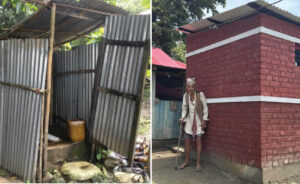
A Two-Fold Approach to Sanitation
Through our Individual Aid and Community Aid programmes, GWT works on two vital fronts to transform sanitation across Nepal:
– In the Home: We build modern, accessible toilets next to the homes of our vulnerable pensioners, fitted with sturdy handrails to reduce the risk of falling.
– In the Community: Through our school construction projects, and at schools in the vicinity of our water project, we construct clean, inclusive sanitation facilities. These have a clean water supply, accessible designs for students with disabilities, and private Menstrual Hygiene Management (MHM) rooms. By providing young girls with a space to manage their periods comfortably, we ensure they never have to miss school or fall behind in their education.
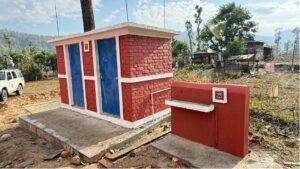
Building facilities is only the first step; long-term sustainability is what changes lives for good. During the social preparation phase of our water projects, our field teams advocate household toilet construction and encourage communities to adopt safe sanitation practices. We teach vital habits like handwashing in schools, and conduct follow-up visits to ensure water systems and toilets are regularly maintained and remain fully operational.
Safe Toilets. Equal Futures.
As we mark World Toilet Day 2026 under the theme “Safe toilets. Equal futures,” our work across Nepal demonstrates that a toilet is far more than basic infrastructure.
A safe toilet protects the dignity of the veterans who served us, gives young students an equal chance at an education, and creates a healthier, brighter future for entire communities in remote areas.