A New Path to Independence: Transforming Lives in Golbazaar
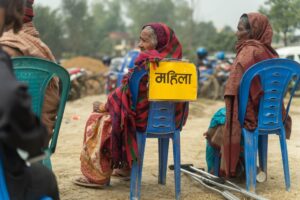
Between 20-22 December GWT held a Specialist Rehabilitation Outreach Camp in Golbazaar in the East of Nepal.
Reaching the Most Disadvantaged Communities
Golbazaar and the surrounding communities in Siraha are among the most disadvantaged areas in the Terai, the lowland area of southern Nepal. Poverty is widespread, livelihoods depend largely on daily wage labour, and access to specialist medical and rehabilitation services is extremely limited. For many families, travelling to Kathmandu or even a regional hospital is financially impossible. As a result, treatable conditions are often left unattended for years, leading to lifelong disability and loss of dignity.
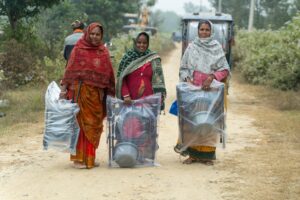
Our three-day outreach camp brought specialist care directly to the community, reaching people who would otherwise have no access to such services. Over the course of the camp, 421 people accessed our rehabilitative services – the number reflect not only the scale of need in the area, but also how long people have been waiting for help.
Manu’s Story

Silu Paswan lives in constant hardship, struggling each day to keep her family fed in a harsh and uncertain environment. She is the mother of Manu Kumar Paswan, a 13-year-old boy born with clubfoot, a congenital condition that could have been treated in early childhood. Like many families living in extreme poverty, Silu did not have the awareness and access to medical care needed at the time, and Manu grew up with the condition untreated.
Manu’s condition has shaped every part of his childhood. He cannot walk properly, cannot play with friends, and has never been able to attend school. Yet Silu says her son is bright and eager to learn. A neighbour’s child, older than Manu, voluntarily teaches him at home. During the camp, Manu proudly showed that he can count from 1 to 100 in Nepali.

Life for the family is extremely difficult. Silu’s husband is deaf and unable to speak, and depends on her for daily guidance. Both Silu and her husband survive on daily wage labour. “If we do not work, we do not have money to buy food for the evening,” she says. The family owns no land and lives in a small hut, always afraid they may be forced to leave at any time. Poverty leaves them with no choices, only daily survival.
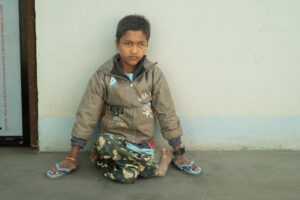
“I don’t know what happened or why this happened to Manu,” Silu says. “All my other children are normal.” The pain of watching her son grow up without a normal childhood has been heavy.
Reaching for help
A turning point came when a local health worker informed Silu about GWT’s specialist outreach rehabilitation camp being held in the municipality. She went there with modest hopes. “I thought they might give him a wheelchair,” she says. Instead, doctors examined Manu and offered something far greater — the possibility of corrective surgery that could allow him to walk independently. “I am truly grateful,” Silu said.
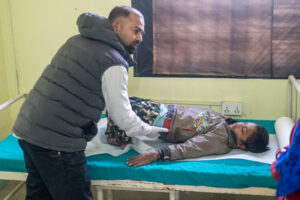
After assessing Manu’s condition, the Gurkha Welfare Trust (GWT) referred him to The Hospital and Rehabilitation Centre for Disabled Children (HRDC) in Kathmandu for surgery. The cost of treatment is far beyond what the family could ever afford and exceeds GWT’s usual support limit. However, considering Manu’s situation, GWT agreed to support this one-off case. HRDC further contributed by offering a 10% discount on the surgery, while Golbazaar Municipality agreed to cover the family’s transportation costs.
This coordination between three institutions has given Manu a chance at a dignified life — something his family never imagined possible. For Silu, the hope is simple but powerful: that her son will walk, go to school, and finally live the childhood he was once denied.
Cases like Manu’s highlight the harsh reality faced by many families in Siraha, where poverty and lack of awareness prevent early treatment. At the same time, they show the importance of outreach camps like this one, which offer hope, restore mobility, and give people a chance to live with dignity through timely and coordinated specialist care.