Celebrating Holi: A colourful festival of unity and joy in Nepal
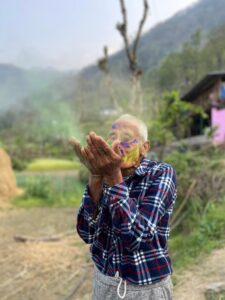
Holi, the festival of colours, is a vibrant celebration that holds immense cultural significance across Nepal. This ancient festival marks the arrival of spring and the triumph of good over evil. In Nepal, Holi transcends religious boundaries, bringing people from all walks of life together to revel in its colourful festivities and spread joy.
What is Holi?
The origins of Holi can be traced back to Hindu mythology, particularly to the legend of Prahlad and Holika, which symbolises the victory of good over evil. In Nepal, the festival also holds significance in Buddhist communities, where it is celebrated as the commemoration of the death of the demoness Holika.
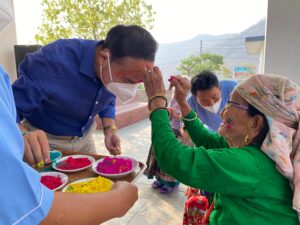
The Rituals of Holi
Homes are adorned with vibrant decorations in the days leading up to Holi, and markets bustle with the sale of coloured powders, water guns, and sweets. On the eve of Holi, bonfires are lit to symbolise the burning of Holika and the triumph of good over evil.
The main event of Holi is celebrated in public spaces, streets, and temples, as people gather armed with coloured powders and water balloons. Friends and strangers alike engage in spirited battles, smearing each other with colourful powders and drenching one another with water. People dance to traditional music, share sweets, and exchange warm greetings of “Happy Holi!.” In a country known for its cultural diversity, Holi serves as a unifying force, fostering bonds of friendship and understanding among communities.
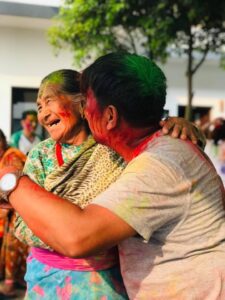
Holi in Nepal is not merely a festival of colours; it is a celebration of life, love, and unity. With its rich historical significance, vibrant rituals, and inclusive spirit, Holi continues to be a cherished tradition that brings people together.