Contact:
01722 323 955 or info@gwt.org.uk
Welfare Advice:
Salisbury 01722 343 111, Aldershot 01252 329 460 or gurkhawelfare@gwt.org.uk
Two of the biggest annual festivals in Nepal are Dashain and Tihar. In 2023 these fall in October and November. Read on to find out what they mean and how they are celebrated by families across Nepal.
Dashain- 15 -24 October 2023
Dashain Festival in Nepal, also known as Vijaya Dashami, is the biggest and longest festival celebrated by Hindus. Dashain lies in the month of Ashwin (September/October). Ashwin is believed to be the happiest month of the year for Nepalese people and is a time for families and loved ones to get together and celebrate.

Staff from our Areq Welfare Centre in Bagmati celebrate Dashain
The importance of Dashain Festival in Nepal
The festival symbolises the victory of good over evil, celebrating the goddess Durga’s defeat of the demon Mahishasura. The first nine days of Dashain symbolize the battle which took place between the different manifestations of Durga and Mahishasura. The tenth day is the day when Durga finally defeated him.
Known as the great harvest festival of Nepal, Dashain is a time for family reunions, exchange of gifts and blessings, and elaborate pujas (ceremonies). Goddess Durga, symbolizing valor and prowess, is worshipped and offered sacrifices to ensure the devotees’ progress and prosperity. The celebrations last for 15 days.
Day one: Ghatasthapana
The first day is marked by sowing Jamara. A sandy rectangular place is established where a Kalash is filled with clean water and sown with barley and corn seeds. The seeds need to be watered daily and is worshipped daily by the eldest male family member. The process continues for seven days, producing the long yellow sacred grass known as ‘Jamara.’
Day seven: Fulpati
The seventh day is known as Fulpati, which literally means ‘flower leaves’. On this day people start to clean and decorate their homes with flowers, fairy lights and banners.
Day nine: Maha Navami
On the ninth day, ceremonies and rituals reach their peak and devotees visit the temples of Kali and Durga to worship these goddesses.
Day ten: Bijayadashami
On the tenth day of the festival the ‘tika’ is prepared. This is a mixture of rice, yogurt and vermilion powder. Elders put the tika and jamara on the forehead of younger relatives to bless them with abundance in the coming years. Red also symbolizes the blood that ties the family and community together. Elders also give ‘Dakshina’, or a small amount of money, to younger relatives when they visit.
Day fifteen: Kojagrat
The final day of the festival is called Kojagrat, meaning “who is awake.” It always falls on the full moon, known as Purnima. There is a myth that if you stay awake all night in Kojagrat Purnima, the goddess of wealth, Laxmi, will give you riches.
Dashain food
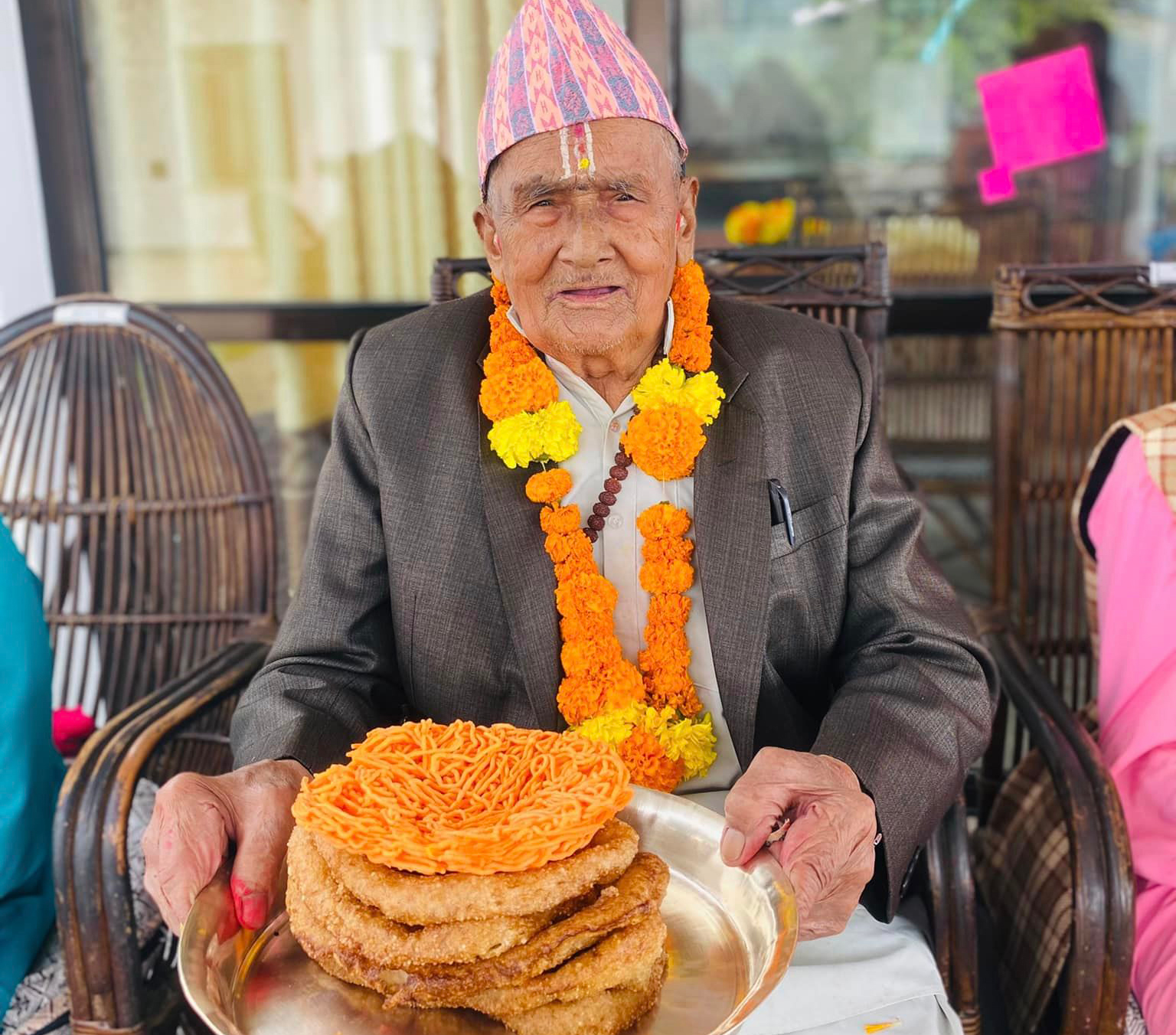
Residents enjoy their favourite treats at Dharan Residential Home
Dashain is a time when people in Nepal enjoy delicious curries and snacks. Many animals and birds – mostly buffaloes, goats, chickens, and ducks – are sacrificed during Dashain. So the most well-known Dashain delicacies are meat-based such as goat pakku, mutton curry, rakti, bhutan, and sukuti. Food is flavoured with spices such as ginger, garlic, cardamom, cinnamon, cumin, nutmeg, coriander, bay leaf, fenugreek and pepper.
Tihar – 10 – 14 November 2023

Tihar, also known as Deepawali or Yamapanchak, stands out as one of the most colorful and enchanting celebrations in Nepal. Spanning five days, this festival holds a special place in the hearts of Nepalese people, as it honors various animals, cultural myths, and strengthens the bonds of love and goodwill.
Day one: Kaag Tihar (Crow Tihar)
The first day of Tihar is dedicated to the crow, considered a messenger of Yama, the god of death in Hindu mythology. People believe that offering food to crows on this day will protect their homes from negative energies and bad omens. As the sun rises, households prepare food offerings like rice, grains, and sweets, placing them on rooftops or open spaces. The cawing of crows signifies the acceptance of the offerings and the blessings of Yama. This day sets the tone for the festival, promoting gratitude and respect for all living creatures.

Day two: Kukur Tihar (Dog Tihar)
On the second day, dogs take the center stage. Dogs, known for their loyalty and companionship, are celebrated with great enthusiasm. People decorate their dogs with flower garlands and tika (a red vermilion mark) on their foreheads, offering them delicious treats and special meals. In Nepalese culture, it is believed that dogs are the guardians of the afterlife, and honoring them on this day ensures safe passage for departed souls. This day is a testament to the bond between humans and their four-legged friends.

Day three: Gai Tihar and Lakshmi Puja (Cow Tohar and Worship of Goddess Laxmi)
he third day is a blend of two significant celebrations: Gai Tihar and Laxmi Puja. Cows, regarded as sacred animals in Hinduism, are adorned with colorful garlands and offered pujas (worship). They symbolize wealth, prosperity, and motherhood. People express gratitude for the invaluable contribution of cows to their livelihoods and agriculture.
In the evening, Laxmi Puja, dedicated to the goddess of wealth and fortune, is performed. Homes are illuminated with oil lamps, candles, and colorful rangoli designs to welcome Goddess Laxmi. Special prayers, offerings, and rituals are conducted to seek her blessings for prosperity, success, and abundance in the coming year. Fireworks and the exchange of gifts are also common on this day.

Day four: Goru Tihar and Govardhan Puja
The fourth day of Tihar is devoted to oxen, known as the backbone of farming in Nepal. These sturdy animals are worshipped with tika, garlands, and special meals as a token of appreciation for their invaluable support in agriculture. This day is also associated with Govardhan Puja, which commemorates Lord Krishna’s act of lifting the Govardhan Hill to protect his fellow villagers from Lord Indra’s wrathful rains. Cow dung is sculpted into hillocks, symbolizing the Govardhan Hill, and worshipped.

Day five: Bhai Tika
The fifth and final day of Tihar is dedicated to the bond between brothers and sisters, similar to the festival of Bhai Dooj celebrated in India. Sisters perform a special puja for their brothers, applying tika, giving them garlands, and preparing a lavish feast. In return, brothers present gifts to their sisters and offer their blessings. This day celebrates the strong sibling relationship and the eternal love between them.

The five days of Tihar in Nepal are a mesmerizing journey through traditions, mythology, and the celebration of life. Each day has its unique significance and serves as a reminder of the profound respect and gratitude that Nepalese people have for animals, their cultural heritage, and the bonds of love and unity within families. This festival of lights truly showcases the beauty and diversity of Nepalese culture and leaves a lasting impression on all those fortunate enough to experience it.