Contact:
01722 323 955 or info@gwt.org.uk
Welfare Advice:
Salisbury 01722 343 111, Aldershot 01252 329 460 or gurkhawelfare@gwt.org.uk
This garden celebrates climate-resilient, wildlife-rich planting, demonstrating how woodland, rain garden and gravel landscapes can nurture biodiversity, restore ecological connections and inspire people to garden with nature and climate change in mind.
The planting offers more than just a pollinator-friendly scheme; these plant combinations provide food across multiple trophic levels and seasons. In other words, the primary consumers, including plant eating insects, caterpillars, aphids, bees & seed eating birds will provide a food source to secondary consumers, eg ladybirds, spiders, frogs and insect-eating birds. The higher trophic levels, animals that feed on the predators, help create a complete and resilient ecosystem.
It is a layered food web rather than isolated food sources.
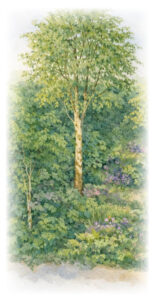
1. Habitats – shelters and homes for wildlife.
The garden creates a layered habitat through woodland-style planting, rain garden conditions and living Terranite wall surfaces. Varied perennial planting, leaf mould-rich soils and gravel mulch support invertebrates and soil organisms. Moss-supporting Terranite panels provide bioreceptive surfaces and microhabitats, while varied canopy, shrub and ground layers increase ecological complexity.
Nests, made by Karen Bek, are placed in some trees. The nests are made with locally foraged living and harvested materials. Woven man-made nests will be adopted by wrens and other small birds, within a year or so, when carefully positioned within vegetation; their natural materials and habitat context will encourage birds to use them.
After the show, integrated nest cups (made by Peak Boxes, 3D printed from corn starch and sawdust) will be fixed inside the lip of the recycled steel pergola, in it’s final location, to encourage house martins to nest there.
2. Water – wet habitats and drinking water.
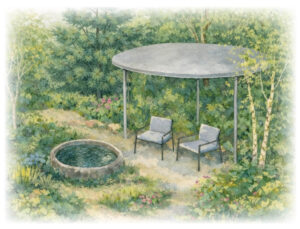 Rainwater is harvested from the recycled steel pergola and directed via rain chain and recycled pipework into a rain garden. This creates a seasonal wet habitat supporting moisture-loving plants and associated invertebrates. By slowing and infiltrating rainfall, the garden provides moisture availability, temporary refuge and accessible drinking opportunities for wildlife.
A raised recycled aluminium pond, filled with fresh water, has a submerged boulder and a solar-powered pump to move the water. The boulder offers a safe area for birds to bathe and drink from the pond. Slightly moving water is more attractive to birds.
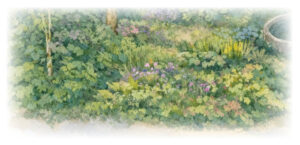
3. Food – biodiversity support.
The garden provides nectar, pollen, shelter and foraging opportunities through diverse perennial planting. Layered planting supports pollinators and beneficial insects, while seedheads, foliage and associated invertebrate life contribute to wider food chains. Healthy soils and moss habitats further support detritivores and microorganisms.
Specific plants + beneficiaries + food source below:
 Nectar/Pollen for bees, bumblebees, butterflies, hoverflies, moths, pollen beetles & other pollinators:
Allium, Anaphalis, Anthemis, Buddleja, Campanula, Clematis, Dianthus, Erigeron, Geranium, Geum, Nepeta, Origanum, Phlomis, Pimpinella, Potentilla, Primula vialii, Salvia, Sanguisorba, Selinum, Silene, Tanacetum, Teucrium, Thymus, Valeriana.
Winter/early season nectar for bees, hoverflies & winter-active insects:
Daphne, Mahonia, Skimmia.
Berry & fruit sources for thrushes, blackbirds, waxwings and small mammals:
Leycesteria, Skimmia, Sorbus, Viburnum
Seedheads and late-season forage for finches, seed-feeding birds and overwintering insects:
Allium, Miscanthus, Persicaria orientalis, Sanguisorba, Tanacetum, Valeriana.
Larval food/foliage value for herbivorous insects:
Campanula, Geranium, Mentha, Origanum, Viburnum.
Indirect food via insect abundance for birds, amphibians, beetles, spiders: ferns, perennials, rain-garden plants, woodland plants.
4. Planting – biodiversity-led plant choices.
Planting is inspired by Himalayan-derived varieties selected for ecological function as well as beauty. Species tolerant of varying moisture conditions support resilience and habitat diversity. Structural and seasonal variation encourages a broad range of wildlife interactions and creates niches from soil surface to canopy.
5. Seasonality – year-round support.
The design aims to provide ecological value throughout the year through evergreen structure, persistent foliage, seasonal flowering and seedheads. Moist soils, moss-supporting surfaces and woodland layers maintain habitat continuity beyond peak flowering periods, recognising biodiversity as a year-round process.
6. Management – biodiversity-friendly practices.
The show garden demonstrates regenerative horticulture through no-dig principles, rainwater harvesting, recycled materials and living soils enriched with organic matter such as leaf mould. No pesticides or artificial fertilisers are used. Water is retained and reused on site, reducing runoff and supporting soil biology while showcasing low-input gardening.
7. Learning, engagement and legacy.
The garden demonstrates practical, transferable techniques that visitors can adopt at home, including rain gardens, water harvesting, no-dig management and biodiverse planting. It highlights gardens as living systems that manage water and support ecology. Following the show, we plan to create a garden for local schoolchildren using a number of the show plants.
HABITATS
This garden provides habitat complexity, supporting not just pollinators but birds, decomposers, predatory insects, amphibians and soil organisms.
Habitats offered by this garden include shelter, nesting, overwintering sites, cool refuge, egg-laying surfaces and soil protection.
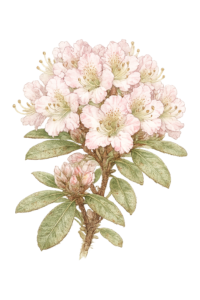
Distinct habitat niches within the show garden:
Evergreen refuge: Ferns, Mahonia, Rhododendron, Skimmia.
Ground/soil habitats: Bergenia, Campanula, Geranium, Thymus.
Wetland/rain-garden habitat: Acorus, Geum, Mentha, Persicaria, Rodgersia.
Overwintering: Miscanthus, Persicaria, Rheum, Sanguisorba.
Bird shrub shelter: Helwingia, Leycesteria, Sorbus, Viburnum.
Below are general examples of which plant forms support which birds and insects:
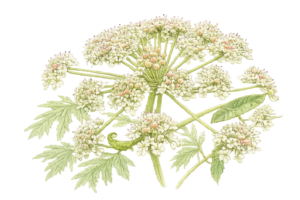
Umbellifers and flat heads: bees, hoverflies, lacewings, butterflies, moths, predatory wasps, ladybirds.
Spikes: bumblebees, honeybees, and small solitary bees, some birds.
Dots, Daisies & Panicles: bees, hoverflies, butterflies.
Grasses – support winter homes for ladybirds, solitary bees, lacewings, nest building material, seeds for birds.
Trees and shrubs produce berries, seeds and catkins.
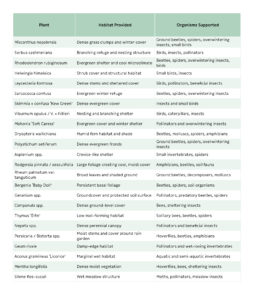
Below is a chart highlighting specific benefits offered by plants in the show garden:
FOOD SOURCES
Specific plants + beneficiaries + food source below:
 Nectar/Pollen for bees, bumblebees, butterflies, hoverflies, moths, pollen beetles & other pollinators:
Allium, Anaphalis, Anthemis, Buddleja, Campanula, Clematis, Dianthus, Erigeron, Geranium, Geum, Nepeta, Origanum, Phlomis, Pimpinella, Potentilla, Primula vialii, Salvia, Sanguisorba, Selinum, Silene, Tanacetum, Teucrium, Thymus, Valeriana.
Winter/early season nectar for bees, hoverflies & winter-active insects:
Daphne, Mahonia, Skimmia.
Berry & fruit sources for thrushes, blackbirds, waxwings and small mammals:
Leycesteria, Skimmia, Sorbus, Viburnum
Seedheads and late season forage for finches, seed-feeding birds and overwintering insects:
Allium, Miscanthus, Persicaria orientalis, Sanguisorba, Tanacetum, Valeriana.
Larval food/foliage value for herbivorous insects:
Campanula, Geranium, Mentha, Origanum, Viburnum.
Indirect food via insect abundance for birds, amphibians, beetles, spiders: ferns, perennials, rain-garden plants, woodland plants.
HOW DIFFERENT GARDENING TECHNIQUES PROMOTE BIODIVERSITY
Dry gardens promote biodiversity by favouring drought-tolerant species with deep roots and varied architecture, supporting specialist pollinators, ground-nesting bees, and resilient soil microbes adapted to low moisture. Open, sun-baked conditions benefit thermophilic invertebrates and seed-eating birds.
Rain gardens capture runoff, slowing water flow and filtering pollutants. Their moisture gradient—from dry edge to wet centre—creates diverse microhabitats for amphibians, aquatic insects, and nectar plants that thrive on periodic flooding.
Woodlands provide multilayered complexity—trees, shrubs, herbs, leaf litter—that sustain fungi, invertebrates, birds, and mammals. Shade, decaying wood, and stable moisture regimes foster long food webs and rich soil ecosystems.